Tompkins Square
Taxi DriverTompkins Square is both a waypoint in Travis Bickle’s night work and the setting of his first encounter with Iris. He later circles back in search of her, making the square a hinge between his aimless patrol of the city and the rescue mission he decides to undertake. Its significance lies less in a description of the place itself than in the encounters and intentions that gather around it.
A waypoint in the night routes
Tompkins Square appears within Travis’s account of driving through the Lower East Side, past B Street and Avenue B, among teenagers he describes as adrift and people alone. He presents himself as cruising and inviting the night to admit him into its darkness, with a gun as a means of feeling real. The square thus belongs to a wider urban route that he experiences not simply as a workplace but as a space of exposure, where he tests his readiness for danger and imagines that his actions might make him significant.
That patrol is part of a broader pattern of choosing where to drive according to his state of mind. After acquiring weapons, Travis deliberately takes fares in dangerous areas, including Harlem, and says he wants to know what would happen if he had to use his guns. Tompkins Square is not identified as the site of a violent confrontation; rather, it is one of the places where this restless movement through the city brings him into contact with people whose circumstances he interprets as a call to act.
First encounter with Iris
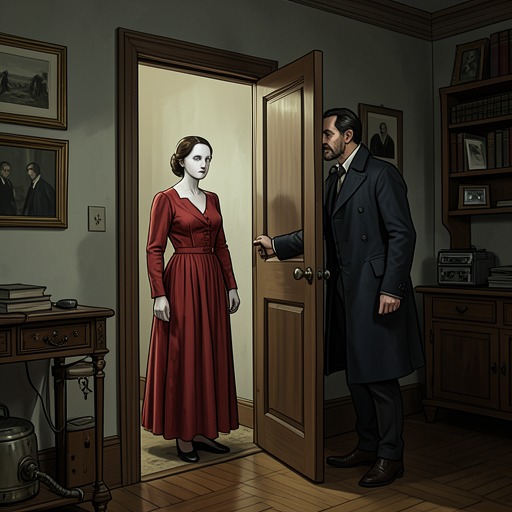
One night, after dropping off a passenger near Tompkins Square, Travis turns to find a girl sitting in the back of his taxi. He estimates that she is fourteen or fifteen, notes that she has been made up to look older, and sees her as pale, slight, and visibly exhausted. She urges him to drive away quickly. He starts the meter and tries not to watch her in the mirror, but doubts her and wonders where someone so young could be going at that hour.
Two days later, Travis drives around the square again, hoping to see her. He believes that if he can help her, she might help him in return, though he does not explain what that help would mean. He soon spots her with another young sex worker, both approaching people on a street corner. From his taxi, he sees them stop to speak with a man standing in a doorway; when Iris notices Travis, she moves away with her companion. The encounter gives his search a specific object, but it also shows that Iris’s movements and choices are not under his control.
From a street encounter to a rescue mission
The later conversation in which Travis tells Iris he intends to get her out of her situation looks back to the taxi encounter as evidence for his plan: he says she had tried to escape in his cab and that Sport had stopped her. Iris says she does not remember. When Travis insists that she wanted to leave, she replies that the place where she is living is her home. She later explains that she had been intoxicated when she was prevented from leaving and that, when sober, she has nowhere else to go; she understands her companions as protecting her from herself.
That disagreement complicates the square’s role in the story. For Travis, the first ride becomes proof that Iris needs to be rescued, and his return to the area acquires the force of a mission. Iris’s own account does not match his certainty: she disputes his reading of the earlier incident and describes practical reasons for staying. At a later breakfast, she tells him she left Pittsburgh because she had nothing there and believes her parents hate her. The novel therefore connects the square to Travis’s intervention without making Iris’s wishes identical to the story he tells himself about saving her.
Narrative significance
Tompkins Square organizes a shift in Travis’s attention: his night driving first takes him through a landscape of strangers, then returns him to one particular girl. The repeated journey gives his urban wandering a target, while his language of becoming real through danger shadows his claim to be acting for Iris’s benefit. The square is consequently a threshold between observation and attempted intervention, not the resolution of Iris’s situation. Its importance rests on that tension between a place Travis revisits with a purpose and a young woman whose account of her choices resists his interpretation.